
BuddhistCatholicContemplativeEvangelicalGeneral ChristianHinduJewishLatter-day SaintMuslimNew VisionsProgressive Christian
Beliefs
- Buddhist
- Catholic
- Contemplative
- Evangelical
- General Christian
- Hindu
- Jewish
- Latter-day Saint
- More Voices
- Muslim
- New Visions
- Pagan
- Progressive Christian
Topics
- Religion News
- Food and Religion
- Sports and Religion
- Religious Art
- Religious Music and Entertainment
- Religious Events
- History and Religion
- Style and Religion
- Politics and Religion
- Women in Religion
- Recreation Outdoors and Religion
- Business Finance and Religion
- Careers Workplace and Religion
- Education and Religion
- Family Parenting and Religion
- Health Fitness and Religion
- Home and Religion
- Relationships and Religion
- Technology and Religion
- Travel and Religion
Columnists
- Buddhist Columnists
- Business Finance and Religion Columnists
- Careers Workplace and Religion Columnists
- Catholic Columnists
- Contemplative Columnists
- Education and Religion Columnists
- Evangelists Columnists
- Family Parenting and Religion Columnists
- General Christian Columnists
- Health Fitness and Religion Columnists
- Hindu Columnists
- History and Religion Columnists
- Home and Religion Columnists
- Jewish Columnists
- More Voices Columnists
- Latter Day Columnists
- Muslim Columnists
- New Visions Columnists
- Nonreligious Columnists
- Pagan Columnists
- Politics and Religion Columnists
- Progressive Columnists
- Recreation Outdoors and Religion Columnists
- Relationships and Religion Columnists
- Religion News Columnists
- Religious Art Columnists
- Religious Events Columnists
- Religious Music and Entertainment Columnists
- Sports and Religion Columnists
- Style and Religion Columnists
- Technology and Religion Columnists
- Travel and Religion Columnists
- Women in Religion Columnists
Resource Library
- 2026 Calendar
- Library of World Religions
- The 100 Most Holy Places on Earth
- Patheos Answers
- Podcasts
- Videos
- Faith Leaders Database
- Anglican Episcopalian
- Bahai
- Baptist
- Buddhism
- Christianity
- Confucianism
- Eastern Orthodoxy
- Hinduism
- Holiness and Pentecostal
- ISKCON
- Islam
- Judaism
- Lutheran
- Methodist
- The Church of Jesus Christ of Latter-day Saints
- New Age
- Paganism
- Presbytarian and Reformed
- Protestantism
- Religion Behind the Scenes
- Roman Catholic
- Scientology
- Shia Islam
- Sikhism
- Sufism
- Sunni Islam
- Taoism
- Zen
- See all religions
Research Tools
 Ad-Free & Subscriber Log-In Subscription Support
Ad-Free & Subscriber Log-In Subscription Support
Follow Patheos 

- Trending:
- Forgiveness
- |
- Marriage
- |
- Consciousness
- |
- Death Penalty
- |
- Election
- |
- Halloween
Catholic
Intensely Catholic
September 12, 2011 by Pat McNamara
"Like" the Patheos Catholic Page on Facebook to receive today's best commentary on Catholic issues.
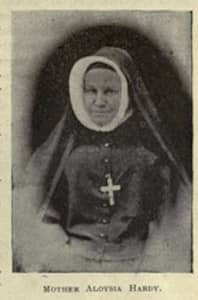 In 1792, when the French revolutionary government repressed all religious orders in the country, it effectively destroyed an educational system that was overwhelmingly Catholic. In the wake of the revolution, many religious communities were founded to revitalize Catholic life in France. One of them was the Society of the Sacred Heart, founded in 1800 by twenty-one-year-old Madeline Sophie Barat, to teach young women. Barat, who led the community for sixty-five years, was canonized in 1925.
In 1818, Sister Rose Philippine Duchesne (canonized in 1988) established their first American foundation in Louisiana. In 1821, she founded the Academy of the Sacred Heart in Grand Couteau (the longest-running Sacred Heart school). One of the school's first five students was twelve-year-old Mary Ann Hardey, whose family had just emigrated from Maryland. Four years later, Mary Ann became one of the community's first American members and went on to found Sacred Heart foundations in the United States, Canada and Cuba as Mother Aloysia Hardey.
The Hardys were among the nation's first Catholic settlers during the 1600's. Mother Aloysia's biographer notes that the family was "so intensely Catholic" that they added an "e" to their name "because some of their kin in Maryland who were known by the latter name had apostatized from the faith." The family left Maryland to take over her late uncle's plantation in Grand Couteau (which also meant that they became slave-owners).
Her first superior said of Sister Aloysia: "She is likely to become a great success." At twenty-three, she was first appointed superior of another convent, which a biographer describes as "a mark of unusual confidence." One former student wrote of her: "I can see her yet, as she looked then, so kind and unaffected in manner, that the youngest child in the house could approach her with ease, and yet, withal, so dignified, that the eldest respected and reverenced her."
In 1841, Mother Aloysia traveled to New York to start the Society's first East Coast foundation. She remained there for over thirty years. The first convent was on the corner of Houston and Mulberry Streets, but she wanted an area with more property for a boarding school. For a while, she tried rural Astoria, but she wasn't completely satisfied with it.
In 1847, New York's Bishop John Hughes told her of property for sale in a section of Harlem known as Manhattanville. The owner refused to sell "to the Church," so Mother Aloysia ordered her students to make a novena (a series of prayers said over the course of nine days). By the ninth day, the owner had died, and the sisters were able to purchase the land. Bishop Hughes commented: "Beware of opposing Mother Hardey because she will kill you with her novenas."
Thus began Manhattanville College (which moved out of the city in 1952). Over thirty international foundations followed in rapid succession: Philadelphia, Boston, Detroit, Providence, Quebec, Halifax, Ontario, Havana. The 1911 Catholic Encyclopedia comments:
She was gifted by nature and grace for immense undertakings; she was of simple manners, her words were few and kind, and she had great power of organization. When asked on her death-bed the number of her foundations, she replied: "I have never counted them, I went where obedience sent me"; that sentence delineates her character and her career.
Over the years, she developed into a capable businesswoman with a keen appreciation for the law. One attorney commented: "She has missed her vocation. If Madame Hardey were a partner in my firm I should be a rich man, for she is the cleverest woman I have ever met."
In 1872, Mother Aloysia moved to Paris to assist the community's superior general. Over the next fourteen years, she oversaw American affairs, and helped establish new foundations in Europe. Known among her French colleagues as the "Grand American," old age and illness eventually took their toll. Mother Aloysia Hardey died at age seventy-seven on June 17, 1886. The community's Superior General wrote: "The ablest physicians were unanimous in saying that the principal vital organs in Mother Hardy were worn out, and we might add, they were worn out in the service of the Divine Master."
9/12/2011 4:00:00 AM
Catholic
In Ages Past
History
Jesuit
Mother Aloysia Hardey
Sacred Heart
Roman Catholicism
more at patheos
1

5 Ways to Avoid Sabotaging Relationships
2

3
Are the Gospels Historically Reliable? The Evidence
4

The Faith Behind “Chilean Mine Rescue: Race Against Time”

About Pat McNamara
Dr. Pat McNamara is a published historian. He blogs about American Catholic History at McNamara's Blog.
Patheos Explore the world's faith through different perspectives on religion and spirituality! Patheos has the views of the prevalent religions and spiritualities of the world.
Ad-Free & Subscriber Log-In Subscription Support
- About Us
- 2026 Calendar
- Videos
- Podcasts
- Library of World Religions
- Faith In Media Tracker
- Advertise With Us
- Write for Us
- Privacy Policy
- Terms of Service
- Do Not Sell My Data
- Contact Us
- Radiant Digital
- Manage Newsletter Subscriptions
- Unsubscribe From Notifications
- Sitemap
Copyright 2008-2026, Patheos. All rights reserved.
Subscription Support Ad-Free & Subscriber Log-In
Follow Patheos