
BuddhistCatholicContemplativeEvangelicalGeneral ChristianHinduJewishLatter-day SaintMuslimNew VisionsProgressive Christian
Beliefs
- Buddhist
- Catholic
- Contemplative
- Evangelical
- General Christian
- Hindu
- Jewish
- Latter-day Saint
- More Voices
- Muslim
- New Visions
- Pagan
- Progressive Christian
Topics
- Religion News
- Food and Religion
- Sports and Religion
- Religious Art
- Religious Music and Entertainment
- Religious Events
- History and Religion
- Style and Religion
- Politics and Religion
- Women in Religion
- Recreation Outdoors and Religion
- Business Finance and Religion
- Careers Workplace and Religion
- Education and Religion
- Family Parenting and Religion
- Health Fitness and Religion
- Home and Religion
- Relationships and Religion
- Technology and Religion
- Travel and Religion
Columnists
- Buddhist Columnists
- Business Finance and Religion Columnists
- Careers Workplace and Religion Columnists
- Catholic Columnists
- Contemplative Columnists
- Education and Religion Columnists
- Evangelists Columnists
- Family Parenting and Religion Columnists
- General Christian Columnists
- Health Fitness and Religion Columnists
- Hindu Columnists
- History and Religion Columnists
- Home and Religion Columnists
- Jewish Columnists
- More Voices Columnists
- Latter Day Columnists
- Muslim Columnists
- New Visions Columnists
- Nonreligious Columnists
- Pagan Columnists
- Politics and Religion Columnists
- Progressive Columnists
- Recreation Outdoors and Religion Columnists
- Relationships and Religion Columnists
- Religion News Columnists
- Religious Art Columnists
- Religious Events Columnists
- Religious Music and Entertainment Columnists
- Sports and Religion Columnists
- Style and Religion Columnists
- Technology and Religion Columnists
- Travel and Religion Columnists
- Women in Religion Columnists
Resource Library
- 2026 Calendar
- Library of World Religions
- The 100 Most Holy Places on Earth
- Patheos Answers
- Podcasts
- Videos
- Faith Leaders Database
- Anglican Episcopalian
- Bahai
- Baptist
- Buddhism
- Christianity
- Confucianism
- Eastern Orthodoxy
- Hinduism
- Holiness and Pentecostal
- ISKCON
- Islam
- Judaism
- Lutheran
- Methodist
- The Church of Jesus Christ of Latter-day Saints
- New Age
- Paganism
- Presbytarian and Reformed
- Protestantism
- Religion Behind the Scenes
- Roman Catholic
- Scientology
- Shia Islam
- Sikhism
- Sufism
- Sunni Islam
- Taoism
- Zen
- See all religions
Research Tools
 Ad-Free & Subscriber Log-In Subscription Support
Ad-Free & Subscriber Log-In Subscription Support
Follow Patheos 

- Trending:
- Forgiveness
- |
- Marriage
- |
- Consciousness
- |
- Death Penalty
- |
- Election
- |
- Halloween
Evangelical
How Abortion Became Illegal in the United States
May 25, 2011 by Frederick N. Dyer
Editor's Note: The article below is published as a part of a symposium hosted by Patheos' Catholic Portal and Evangelical Portal, entitled, "For Life and Family: Faith and the Future of Social Conservatism."
 Abortions increased in the United States after the state laws against abortion wereoverturned by Roe v. Wade. According to the Guttmacher Institute, abortions gradually rose from 898,600 in 1974, the first full year following legalization, to 1,497,700 in 1979. After 1979, the number stabilized for several years at around 1,570,000. The gradual increase from 1974 through 1979 suggests that the laws against abortion continued to suppress abortion for six years after their nullification. There has been a drop in abortions from their high in the 1980s and it is no coincidence that many states have passed restrictions on abortion, like the requirement for parental notification.
The lesson of this is that legal restrictions on abortion are effective in reducing abortions. You may be surprised to learn that abortions were already prevalent in the United States by the 1850s. You may also be surprised to learn that it was primarily married Protestant women who were seeking and receiving them. There is little doubt that the laws against abortion that were passed by the states and territories between 1860 and 1880 had an immediate effect of reducing the number of abortions.
It was physicians who discovered and described the abortion problem. A Rhode Island physician, John Preston Leonard, published an article, "Quackery and Abortion," in the Boston Medical and Surgical Journal in January 1851. Leonard's article included: "This crime is every day becoming more prevalent. It is humiliating to admit that there are a class of physicians who, Herod-like, have waged a war of destruction upon the innocent. Though their motives are not the same as those which instigated that cruel king, they are no less murderers."
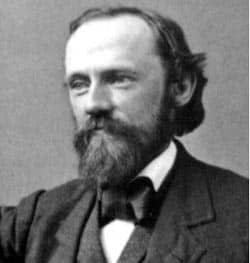
Horatio Robinson Storer was a medical student in nearby Boston in 1851 and it is possible that he influenced Leonard or was influenced by Leonard. Leonard died shortly after his 1851 article was published and Storer took up the cudgel against criminal abortion. He graduated from the Boston Medical School in 1853, studied in Edinburgh, Scotland for a year, and returned to Boston to become one of the first American gynecologists. Storer discovered that many of his patients had a history of induced abortion and, like Leonard, he was greatly concerned that criminal abortion was prevalent.
The indefatigable Dr. Horatio Robinson Storer brought the American Medical Association into the fight against abortion in 1857. Made Chairman of the AMA Committee on Criminal Abortion, he helped prepared a Report on Criminal Abortion that was presented to the Association in 1859. The Report outlined the problem and pointed out defects of current laws. It requested the Association "recommend, by memorial, to the governors and legislatures of the several States, and, as representing the federal district, to the President and Congress, a careful examination and revision of the statutory and of so much of the common law, as relates to this crime."
The American Medical Association unanimously accepted the Report on Criminal Abortion and its recommendation to seek improved laws against abortion. Storer prepared the Memorial that the American Medical Association sent to the President of the United States and to the Governors and Legislatures of each state and territory. It described the high and increasing rate of criminal abortion, which led to the deaths of "hundreds of thousands," and called for the legislators of the state or territory to pass stringent laws to reduce these deaths.
Storer also prepared the Address that the American Medical Association sent along with the Memorial to the medical societies of each state and territory. The Address concluded: "it now has become our duty earnestly to request of the body you represent, such early and hearty action in furtherance of the memorial of the Association, as may insure its full success against the common, though unnatural crime it aims to check."
Article Continued On Next Page
Page: 1 of 2
5/25/2011 4:00:00 AM
Evangelical
Abortion
History
Law
Medicine
politics
Social conservatism
Christianity
Evangelicalism
more at patheos
1

Women's Movement? I Wanted Him to Lead But Wouldn't Let Him
2

Gen AI Demands We Keep Learning or Become Obsolete
3

4

How a Pastor Actually Writes a Sermon
About
Patheos Explore the world's faith through different perspectives on religion and spirituality! Patheos has the views of the prevalent religions and spiritualities of the world.
Ad-Free & Subscriber Log-In Subscription Support
- About Us
- 2026 Calendar
- Videos
- Podcasts
- Library of World Religions
- Faith In Media Tracker
- Advertise With Us
- Write for Us
- Privacy Policy
- Terms of Service
- Do Not Sell My Data
- Contact Us
- Radiant Digital
- Manage Newsletter Subscriptions
- Unsubscribe From Notifications
- Sitemap
Copyright 2008-2026, Patheos. All rights reserved.
Subscription Support Ad-Free & Subscriber Log-In
Follow Patheos