
BuddhistCatholicContemplativeEvangelicalGeneral ChristianHinduJewishLatter-day SaintMuslimNew VisionsProgressive Christian
Beliefs
- Buddhist
- Catholic
- Contemplative
- Evangelical
- General Christian
- Hindu
- Jewish
- Latter-day Saint
- More Voices
- Muslim
- New Visions
- Pagan
- Progressive Christian
Topics
- Religion News
- Food and Religion
- Sports and Religion
- Religious Art
- Religious Music and Entertainment
- Religious Events
- History and Religion
- Style and Religion
- Politics and Religion
- Women in Religion
- Recreation Outdoors and Religion
- Business Finance and Religion
- Careers Workplace and Religion
- Education and Religion
- Family Parenting and Religion
- Health Fitness and Religion
- Home and Religion
- Relationships and Religion
- Technology and Religion
- Travel and Religion
Columnists
- Buddhist Columnists
- Business Finance and Religion Columnists
- Careers Workplace and Religion Columnists
- Catholic Columnists
- Contemplative Columnists
- Education and Religion Columnists
- Evangelists Columnists
- Family Parenting and Religion Columnists
- General Christian Columnists
- Health Fitness and Religion Columnists
- Hindu Columnists
- History and Religion Columnists
- Home and Religion Columnists
- Jewish Columnists
- More Voices Columnists
- Latter Day Columnists
- Muslim Columnists
- New Visions Columnists
- Nonreligious Columnists
- Pagan Columnists
- Politics and Religion Columnists
- Progressive Columnists
- Recreation Outdoors and Religion Columnists
- Relationships and Religion Columnists
- Religion News Columnists
- Religious Art Columnists
- Religious Events Columnists
- Religious Music and Entertainment Columnists
- Sports and Religion Columnists
- Style and Religion Columnists
- Technology and Religion Columnists
- Travel and Religion Columnists
- Women in Religion Columnists
Resource Library
- 2026 Calendar
- Library of World Religions
- The 100 Most Holy Places on Earth
- Patheos Answers
- Podcasts
- Videos
- Faith Leaders Database
- Anglican Episcopalian
- Bahai
- Baptist
- Buddhism
- Christianity
- Confucianism
- Eastern Orthodoxy
- Hinduism
- Holiness and Pentecostal
- ISKCON
- Islam
- Judaism
- Lutheran
- Methodist
- The Church of Jesus Christ of Latter-day Saints
- New Age
- Paganism
- Presbytarian and Reformed
- Protestantism
- Religion Behind the Scenes
- Roman Catholic
- Scientology
- Shia Islam
- Sikhism
- Sufism
- Sunni Islam
- Taoism
- Zen
- See all religions
Research Tools
 Ad-Free & Subscriber Log-In Subscription Support
Ad-Free & Subscriber Log-In Subscription Support
Follow Patheos 

- Trending:
- Forgiveness
- |
- Marriage
- |
- Consciousness
- |
- Death Penalty
- |
- Election
- |
- Halloween
Catholic
The Everyday Apocalypse and Blaise Pascal
August 25, 2010
By Frank Weathers
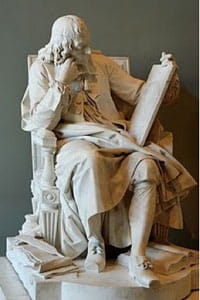 My friend Webster has been serving at funerals lately*,* one in early December and one just a few days ago. And in a prediction that is all too likely to come to fruition, he believes he will attend the funeral of at least one dear friend this year. Reading these posts, I reflect on the fragility of human life and the sudden impact on our loved ones lives when we depart this mortal coil.
A sudden death, an accidental death, the unexpected death is always a shocker. Others are blessed with an illness -- or maybe it's not a blessing, to see the train enter the station that will inevitably bear them away. There is pain, and suffering in the long, drawn-out route to eternity.
The fact that our own death is inevitable is why I don't spend much mental horsepower worrying about the Apocalypse. Fifteen seconds from now is more likely to be the end times for me, and that is likely true for you too. By preparing for the near term, and I argue, the more likely event, I'll be prepared, like a good Boy Scout, if I am blessed to witness the Second Coming.
As I have come to find out through reading about their lives, many of the saints recommend that you ponder your personal end times often. Though not an official saint, my buddy Blaise Pascal (pictured here, sitting in the Louvre in Paris) did his share of pondering death. Perhaps he's proofreading the letter he wrote to his sister upon the death of his father. I'm not sure how she took it, but it provided me much comfort and became another reason why I am Catholic.
After his introduction expressing remorse at this news he writes that,
In the midst of grief . . . we should seek consolation in our ills, not in ourselves, not in men, not in anything that is created; but in God. And the reason is, that all creatures are not the first cause of the accidents that we call evils; but that the providence of God being the only and veritable cause, the arbiter and the sovereign of them, it is indubitable that we must resort directly to the source, and go back to the origin to find a solid alleviation.
And now, get ready for the longest, most cogent and understandable sentence regarding death that any mathematician has ever written in the history of mankind (I can't verify this but shee-eesh!).
If we follow this precept, and if we regard this event, not as an effect of chance, not as a fatal necessity of nature, not as the play of the elements and parts of which man is composed (for God has not abandoned his elect to caprice and chance) but as a result indispensable, inevitable, just, holy, useful to the good of the Church, and to the exaltation of the name and greatness of God, of a decree of his providence conceived from all eternity to be executed in the plenitude of its time in such a year, such a day, such an hour, such a place, such a manner; and, in short, that all that has happened has been from all time foreknown and foreordained of God; if, I say, through a transport of grace, we regard this accident, not in itself and apart from God, but apart from itself and in the inmost part of the will of God, in the justice of his decree, in the order of his providence, which is the true cause of it, without which it would not have happened, and in the manner in which it happened, through which alone it has happened; we shall adore in humble silence the impenetrable loftiness of his secrets, we shall venerate the sanctity of his decrees, we shall bless the acts of his providence, and, uniting our will to that of God himself, we shall wish with him the thing that he has willed in us and for us for all eternity.
Sure, Blaise could have used an editor. But this was a letter to his sister written while he was grieving. And -- if you could have edited that sentence, what would you have removed? Uh, huh -- absolutely nothing! It is a great summation of the fact that God's will is being done whether we see it that way or not.
Blaise continues to console his sister masterfully, paragraph after paragraph. He mentions that it is certain that neither the philosophies of Socrates nor Seneca can provide any solace to the question of our mortality. And that is because they believed that it was merely natural that all men die.
But Blaise, being a good Catholic Christian sees death in an entirely different light. He acknowledges this as follows,
Article Continued On Next Page
Page: 1 of 2
8/25/2010 4:00:00 AM
Catholic
Afterlife
Death
History
Roman Catholicism
more at patheos
1

The Supreme Court Monday Order List Explained
2
When Jesus Sinned : Lessons From a So-Called Dog
3

Healing Across Boundaries - Pentecost 12 - August 16, 2026
4
The Incarnation And The Christian Use Of Images
About
Patheos Explore the world's faith through different perspectives on religion and spirituality! Patheos has the views of the prevalent religions and spiritualities of the world.
Ad-Free & Subscriber Log-In Subscription Support
- About Us
- 2026 Calendar
- Videos
- Podcasts
- Library of World Religions
- Faith In Media Tracker
- Advertise With Us
- Write for Us
- Privacy Policy
- Terms of Service
- Do Not Sell My Data
- Contact Us
- Radiant Digital
- Manage Newsletter Subscriptions
- Unsubscribe From Notifications
- Sitemap
Copyright 2008-2026, Patheos. All rights reserved.
Subscription Support Ad-Free & Subscriber Log-In
Follow Patheos