
BuddhistCatholicContemplativeEvangelicalGeneral ChristianHinduJewishLatter-day SaintMuslimNew VisionsProgressive Christian
Beliefs
- Buddhist
- Catholic
- Contemplative
- Evangelical
- General Christian
- Hindu
- Jewish
- Latter-day Saint
- More Voices
- Muslim
- New Visions
- Pagan
- Progressive Christian
Topics
- Religion News
- Food and Religion
- Sports and Religion
- Religious Art
- Religious Music and Entertainment
- Religious Events
- History and Religion
- Style and Religion
- Politics and Religion
- Women in Religion
- Recreation Outdoors and Religion
- Business Finance and Religion
- Careers Workplace and Religion
- Education and Religion
- Family Parenting and Religion
- Health Fitness and Religion
- Home and Religion
- Relationships and Religion
- Technology and Religion
- Travel and Religion
Columnists
- Buddhist Columnists
- Business Finance and Religion Columnists
- Careers Workplace and Religion Columnists
- Catholic Columnists
- Contemplative Columnists
- Education and Religion Columnists
- Evangelists Columnists
- Family Parenting and Religion Columnists
- General Christian Columnists
- Health Fitness and Religion Columnists
- Hindu Columnists
- History and Religion Columnists
- Home and Religion Columnists
- Jewish Columnists
- More Voices Columnists
- Latter Day Columnists
- Muslim Columnists
- New Visions Columnists
- Nonreligious Columnists
- Pagan Columnists
- Politics and Religion Columnists
- Progressive Columnists
- Recreation Outdoors and Religion Columnists
- Relationships and Religion Columnists
- Religion News Columnists
- Religious Art Columnists
- Religious Events Columnists
- Religious Music and Entertainment Columnists
- Sports and Religion Columnists
- Style and Religion Columnists
- Technology and Religion Columnists
- Travel and Religion Columnists
- Women in Religion Columnists
Resource Library
- 2026 Calendar
- Library of World Religions
- The 100 Most Holy Places on Earth
- Patheos Answers
- Podcasts
- Videos
- Faith Leaders Database
- Anglican Episcopalian
- Bahai
- Baptist
- Buddhism
- Christianity
- Confucianism
- Eastern Orthodoxy
- Hinduism
- Holiness and Pentecostal
- ISKCON
- Islam
- Judaism
- Lutheran
- Methodist
- The Church of Jesus Christ of Latter-day Saints
- New Age
- Paganism
- Presbytarian and Reformed
- Protestantism
- Religion Behind the Scenes
- Roman Catholic
- Scientology
- Shia Islam
- Sikhism
- Sufism
- Sunni Islam
- Taoism
- Zen
- See all religions
Research Tools
 Ad-Free & Subscriber Log-In Subscription Support
Ad-Free & Subscriber Log-In Subscription Support
Follow Patheos 

- Trending:
- Forgiveness
- |
- Marriage
- |
- Consciousness
- |
- Death Penalty
- |
- Election
- |
- Halloween
Pagan
Ethics from Within, Not from Above
October 27, 2011 by Gus diZerega
"Like" the Patheos Pagan Page on Facebook to receive today's best commentary on Pagan issues.
I am finishing a book on which I have been focused for the better part of 8 years, a book that started out as an exploration of the modern right wing and their faux masculinity as a reaction to the feminine values that characterized the 60s counterculture, and which birthed modern Neo-Paganism as a rapidly growing spiritual community. But as I worked on it, the questions I encountered got deeper and deeper, and as I pursued them the project got less and less tied up with the political issues of the day.
Ultimately, it began exploring the growing bankruptcy of traditional Western values as their foundations in habits of thought rooted in transcendental monotheism withered. I want to outline that argument here because I think it stands on its own in many ways and also suggests a way in which modern Pagans can contribute powerfully to our society as a whole.
Hidden Transcendental Monotheist Assumptions
Beginning with John Locke, the modern Western liberal tradition gave us the principles behind our Declaration of Independence, religious toleration, and the vision that no person is properly the tool of another. But Locke rooted his case in liberal Christianity, and as its persuasiveness faded for many intellectuals, a search for ever more secular sources for such an ethics began. But even the most secular of these thinkers generally imported unexamined monotheistic habits of thought, particularly that moral rules must come from outside the world as the dictates of logic serving as a substitute for God.
One of the most influential of these alternatives was rooted in Immanuel Kant's effort to ground ethics as absolutes removed from their practical impact in day-to-day cases. The good is what it is regardless of its particular consequences. Kant's competitor was utilitarianism, which adopted the opposite approach: the good is that which creates the most happiness for the greatest number. Only consequences matter.
Both have failed to find the kind of near-universal agreement once provided by transcendental monotheism. For many secular thinkers, a kind of nihilism has taken over. There are no basic ethical principles, and so either power, or the force of will imposing a vision (which is another kind of power), takes the place of ethics as providing a reliable context for our actions.
A Neglected Alternative
Importantly, some thinkers found an alternative source for understanding the reality of values, one rooted in the world and in our embodiment. There are many and interestingly, unlike the ethics of Kant and the Utilitarians, they do not contradict one another. Leonardo Da Vinci developed arguments about the relation of knowledge with love. David Hume and Adam Smith's work on sympathy (what we today call empathy) rooted ethics in the very nature of self-awareness. Our Declaration of Independence's argument that rights were self-evident was based on centuries of legal reasoning demonstrating people were in some sense responsible for their actions, and so could not be property, for with property the owner was always held responsible. Charles Darwin explained how ethics is an emergent quality from within the evolutionary process. Darwin's argument has been powerfully verified by recent work on morality in animals.
This alternative tradition, one finding value immanent within the world rather than transcendental to it, has developed arguments that impress me as both powerful and empirically verifiable. They have also largely been ignored. Today hardly anyone even understands what Jefferson meant in our Declaration. Adam Smith's Theory of Moral Sentiments is little known, Hume is falsely categorized as a utilitarian, and Darwin is falsely said to be responsible for "social Darwinism." Leonardo, despite his genius, was ignored on this issue. Why?
I think because even secular thinkers mostly believe we are intrinsically amoral or worse, and that therefore morality must come from without, and at best, it must be backed with the coercive power of logic if not of God's demands and the threat of Hell. Nothing short of that will do the job. If all these efforts fail, then we live in a world without meaning except what our will power, backed by other power, can give it. I think this is the dominant ethical outlook within much of our elite today, right, center, and left.
They are unconscious monotheists, carrying with them assumptions about the world and human beings rooted in the Christian doctrine of the Fall and God's pure transcendence.
These doctrines are not true for all Christian traditions. Quakers are an exception. So are the Orthodox. But these doctrines have long been the dominant Christian views in the West. As such, these beliefs so shaped our moral and intellectual world that they have long outlived many people's awareness of their origins. They just seem "natural." And when ethics from above fails to convince, the result for many is to descend into nihilism and obsession with power. Even Friedrich Nietzsche, perhaps the first major philosopher to realize the devastating implications for traditional Western morality hidden within the rise of modern secularism, failed to free himself from this confusion. If God is dead, "all is permitted."
Article Continued On Next Page
Page: 1 of 2
10/27/2011 4:00:00 AM
Pagan
Pointedly Pagan
Ethics
Paganism
more at patheos
1

Draft Amendments to Address Ritual Abuse in New York
2

Rehumanizing Christa Pike: On the Consequences of Evil
3

4
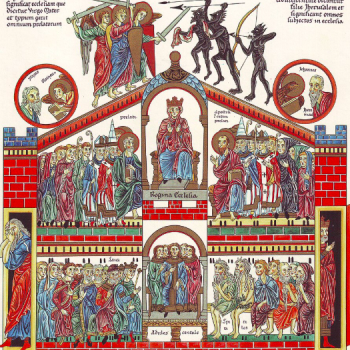
The Gospel of John: The New Torah, Part II
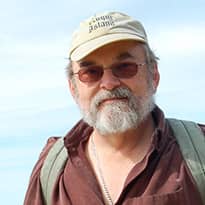
About Gus diZerega
Gus diZerega is a Gardnerian Elder with over 25 years practice, including six years close study with a Brazilian shaman. He has been active in interfaith work off and on for most of those 25 years as well. He has conducted workshops and given presentations on healing, shamanism, ecology and politics at Pagan gatherings in the United States and Canada. Follow Gus on Facebook. Gus blogs at Pointedly Pagan
Patheos Explore the world's faith through different perspectives on religion and spirituality! Patheos has the views of the prevalent religions and spiritualities of the world.
Ad-Free & Subscriber Log-In Subscription Support
- About Us
- 2026 Calendar
- Videos
- Podcasts
- Library of World Religions
- Faith In Media Tracker
- Advertise With Us
- Write for Us
- Privacy Policy
- Terms of Service
- Do Not Sell My Data
- Contact Us
- Radiant Digital
- Manage Newsletter Subscriptions
- Unsubscribe From Notifications
- Sitemap
Copyright 2008-2026, Patheos. All rights reserved.
Subscription Support Ad-Free & Subscriber Log-In
Follow Patheos