
BuddhistCatholicContemplativeEvangelicalGeneral ChristianHinduJewishLatter-day SaintMuslimNew VisionsProgressive Christian
Beliefs
- Buddhist
- Catholic
- Contemplative
- Evangelical
- General Christian
- Hindu
- Jewish
- Latter-day Saint
- More Voices
- Muslim
- New Visions
- Pagan
- Progressive Christian
Topics
- Religion News
- Food and Religion
- Sports and Religion
- Religious Art
- Religious Music and Entertainment
- Religious Events
- History and Religion
- Style and Religion
- Politics and Religion
- Women in Religion
- Recreation Outdoors and Religion
- Business Finance and Religion
- Careers Workplace and Religion
- Education and Religion
- Family Parenting and Religion
- Health Fitness and Religion
- Home and Religion
- Relationships and Religion
- Technology and Religion
- Travel and Religion
Columnists
- Buddhist Columnists
- Business Finance and Religion Columnists
- Careers Workplace and Religion Columnists
- Catholic Columnists
- Contemplative Columnists
- Education and Religion Columnists
- Evangelists Columnists
- Family Parenting and Religion Columnists
- General Christian Columnists
- Health Fitness and Religion Columnists
- Hindu Columnists
- History and Religion Columnists
- Home and Religion Columnists
- Jewish Columnists
- More Voices Columnists
- Latter Day Columnists
- Muslim Columnists
- New Visions Columnists
- Nonreligious Columnists
- Pagan Columnists
- Politics and Religion Columnists
- Progressive Columnists
- Recreation Outdoors and Religion Columnists
- Relationships and Religion Columnists
- Religion News Columnists
- Religious Art Columnists
- Religious Events Columnists
- Religious Music and Entertainment Columnists
- Sports and Religion Columnists
- Style and Religion Columnists
- Technology and Religion Columnists
- Travel and Religion Columnists
- Women in Religion Columnists
Resource Library
- 2026 Calendar
- Library of World Religions
- The 100 Most Holy Places on Earth
- Patheos Answers
- Podcasts
- Videos
- Faith Leaders Database
- Anglican Episcopalian
- Bahai
- Baptist
- Buddhism
- Christianity
- Confucianism
- Eastern Orthodoxy
- Hinduism
- Holiness and Pentecostal
- ISKCON
- Islam
- Judaism
- Lutheran
- Methodist
- The Church of Jesus Christ of Latter-day Saints
- New Age
- Paganism
- Presbytarian and Reformed
- Protestantism
- Religion Behind the Scenes
- Roman Catholic
- Scientology
- Shia Islam
- Sikhism
- Sufism
- Sunni Islam
- Taoism
- Zen
- See all religions
Research Tools
 Ad-Free & Subscriber Log-In Subscription Support
Ad-Free & Subscriber Log-In Subscription Support
Follow Patheos 

- Trending:
- Forgiveness
- |
- Marriage
- |
- Consciousness
- |
- Death Penalty
- |
- Election
- |
- Halloween
Change That Condemns the Poor
September 16, 2009
By Scott C. Sabin
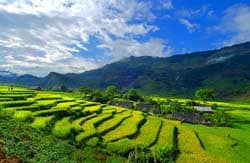 Despite working in the field of creation care for over fifteen years, I had, until recently, been marginally aware of the implications of climate change. Floresta's work with reforestation kept me focused, and I rationalized that whether climate change was real or not, it wouldn't change what we were doing. We would still help the rural poor to fight deforestation and poverty. There was no need to focus on something as controversial as climate change. After all, I had donors to placate.
However, just a little research points out the fallacy of this approach. First, climate change is already having a huge impact on people around the world. It is affecting lives today. My Hezekiah attitude ("At least it won't happen in my lifetime") was not only selfish, it was misplaced. Furthermore, climate change will have a much greater impact on the poor, whose cause we claim to champion.
In years past, I spent many days on the bridge of a Navy ship, eyes focused on the horizon, watching for bad weather or enemy threats. I remember well the feeling in your stomach when the horizon gets dark with an oncoming squall, or when the barometer begins to drop quickly. You know that soon you will be in the heart of it. That is the feeling I get now, as I look at reports coming in from around the world. We are in for rough weather. But it is our watch, and we must do everything in our power to be prepared.
We continue to debate some of the early symptoms of climate change in North America: drought in the Southeast, dying forests in Canada and Alaska, fires in California, perhaps Hurricane Katrina. As a San Diegan, I was a witness to the enormous evacuation that took place during our recent fire storms. Nearly one million people were evacuated from their homes over the course of the week. It was spectacular, and for most of us, only a minor annoyance. But it occurred in an area of relative wealth and in a country with tremendous resources and the ability to adapt. Imagining a similar scenario in Port au Prince, for example, is horrifying.
The Intergovernmental Panel on Climate Change (IPCC), recipient of the 2007 Nobel Peace Prize, provides us one of the clearest pictures of what the future may look like. Their Fourth Assessment Report, which is available both in its entirety and in summary on their website (www.ipcc.ch), provides a sobering outlook. Eleven of the last twelve years have been the warmest on record, the sea level is rising, and around the world glaciers are in retreat. Extreme weather will become more common. Most frightening is the fact that precipitation patterns are changing, with more drought and more flooding evident. According to the IPCC these changes are very likely (more than 90%) due to human activity.
Furthermore, even if greenhouse gases were stabilized today, warming and sea level rise would continue for centuries.
Rather than an excuse for inactivity, this means that regardless of our ability to offset or reduce our greenhouse gas emissions, it will be absolutely necessary to adapt or prepare for change. Better evacuation procedures and firefighting equipment in San Diego is an example. But as the report points out, ability to adapt is directly related to social and economic development, putting the poor in the most vulnerable position. With our special charge to care for the poor, this is just one of many reasons why Christians should be particularly concerned about climate change.
The report of Working Group II of the IPCC goes into detail on specific impacts of warming. They are unevenly distributed, with the poor unjustly bearing the brunt of the negative effects. Water availability is actually expected to increase in high latitudes, but to decrease by 10-30% in the dry tropics and dry mid-latitudes. In Africa, where access to water is already a critical issue, between 75 and 250 million people are projected to face increased water stress by the year 2020. In some countries, yields from rain-fed agriculture could be reduced by up to 50%. In other words, those too poor to irrigate their land will face the worst suffering -- essentially a death sentence for a huge number of people. In America, where we are often insulated from our environment, it is hard to remember that millions of people around the world are completely reliant on the predictability of rainfall.
Article Continued On Next Page
Page: 1 of 2
9/16/2009 4:00:00 AM
Ecology
Environment
Nature
Christianity
Evangelicalism
more at patheos
1

Top of the Country: With Heaven on Top (Album)
2
Adventurous Lectionary - The Heart of Wisdom - July 26
3

Urgent: My new book is only 99 cents until Sunday night
4
Sunday Readings: Trusting in God's Abundant Provision
About
Patheos Explore the world's faith through different perspectives on religion and spirituality! Patheos has the views of the prevalent religions and spiritualities of the world.
Ad-Free & Subscriber Log-In Subscription Support
- About Us
- 2026 Calendar
- Videos
- Podcasts
- Library of World Religions
- Faith In Media Tracker
- Advertise With Us
- Write for Us
- Privacy Policy
- Terms of Service
- Do Not Sell My Data
- Contact Us
- Radiant Digital
- Manage Newsletter Subscriptions
- Unsubscribe From Notifications
- Sitemap
Copyright 2008-2026, Patheos. All rights reserved.
Subscription Support Ad-Free & Subscriber Log-In
Follow Patheos