
BuddhistCatholicContemplativeEvangelicalGeneral ChristianHinduJewishLatter-day SaintMuslimNew VisionsProgressive Christian
Beliefs
- Buddhist
- Catholic
- Contemplative
- Evangelical
- General Christian
- Hindu
- Jewish
- Latter-day Saint
- More Voices
- Muslim
- New Visions
- Pagan
- Progressive Christian
Topics
- Religion News
- Food and Religion
- Sports and Religion
- Religious Art
- Religious Music and Entertainment
- Religious Events
- History and Religion
- Style and Religion
- Politics and Religion
- Women in Religion
- Recreation Outdoors and Religion
- Business Finance and Religion
- Careers Workplace and Religion
- Education and Religion
- Family Parenting and Religion
- Health Fitness and Religion
- Home and Religion
- Relationships and Religion
- Technology and Religion
- Travel and Religion
Columnists
- Buddhist Columnists
- Business Finance and Religion Columnists
- Careers Workplace and Religion Columnists
- Catholic Columnists
- Contemplative Columnists
- Education and Religion Columnists
- Evangelists Columnists
- Family Parenting and Religion Columnists
- General Christian Columnists
- Health Fitness and Religion Columnists
- Hindu Columnists
- History and Religion Columnists
- Home and Religion Columnists
- Jewish Columnists
- More Voices Columnists
- Latter Day Columnists
- Muslim Columnists
- New Visions Columnists
- Nonreligious Columnists
- Pagan Columnists
- Politics and Religion Columnists
- Progressive Columnists
- Recreation Outdoors and Religion Columnists
- Relationships and Religion Columnists
- Religion News Columnists
- Religious Art Columnists
- Religious Events Columnists
- Religious Music and Entertainment Columnists
- Sports and Religion Columnists
- Style and Religion Columnists
- Technology and Religion Columnists
- Travel and Religion Columnists
- Women in Religion Columnists
Resource Library
- 2026 Calendar
- Library of World Religions
- The 100 Most Holy Places on Earth
- Patheos Answers
- Podcasts
- Videos
- Faith Leaders Database
- Anglican Episcopalian
- Bahai
- Baptist
- Buddhism
- Christianity
- Confucianism
- Eastern Orthodoxy
- Hinduism
- Holiness and Pentecostal
- ISKCON
- Islam
- Judaism
- Lutheran
- Methodist
- The Church of Jesus Christ of Latter-day Saints
- New Age
- Paganism
- Presbytarian and Reformed
- Protestantism
- Religion Behind the Scenes
- Roman Catholic
- Scientology
- Shia Islam
- Sikhism
- Sufism
- Sunni Islam
- Taoism
- Zen
- See all religions
Research Tools
 Ad-Free & Subscriber Log-In Subscription Support
Ad-Free & Subscriber Log-In Subscription Support
Follow Patheos 

- Trending:
- Forgiveness
- |
- Marriage
- |
- Consciousness
- |
- Death Penalty
- |
- Election
- |
- Halloween
Evangelical
Is the Arab Spring Good News for Christians?
January 09, 2012 by Kurt J. Werthmuller
"Like" the Patheos Evangelical Page on Facebook to receive today's best commentary on Evangelical issues.
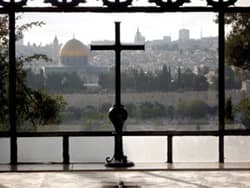 Until relatively recently, few American evangelicals knew that there is an indigenous Christian community anywhere to be found in the Middle East. Most had a dichotomous view of the region: there was the Arab world, which many presumed to represent a homogeneous and antagonistic Muslim region, and the "Holy Land"—which is evangelical-speak for a homogeneous, Jewish Israel.
Neither image reflects reality, of course. The "Holy Land" includes Israeli Jews (along a spectrum of secular and religious persuasions), a significant minority of Israeli Arabs, and the Palestinian territories. And while Sunni Muslims do comprise an overwhelming majority of the populations in the Arab world, a number of Arab states also include sizeable communities of religious minorities, including small heterodox sects (Alawi, Druze, Yazidi, etc.) and a surprising number of Christians.
In fact, the broad experience and status of Middle Eastern Christianity is diverse, and it is ancient. There has been an unbroken Christian presence in Egypt—that is, the Copts—since the first century, when the apostle Mark preached the Gospel in Alexandria. Christians probably became a demographic majority of the country by the 4th century, and likely remained so until the 10th (centuries after the Islamic Conquests); even today, there are likely seven million or more Christians in the country: Orthodox, Catholic, and Protestant. In Syria, where a variety of Christian denominations comprise around 10 percent of the population, one can still hop on a bus from Damascus to the village of Maaloula, where several thousand Christian residents of the town, and dozens of monks in the abbeys above it, still speak Aramaic among their families. Most of that nations' Christians are Greek Catholic, or Melkite, a sect that combines Eastern Orthodox liturgy with Catholic loyalties, and can be found connected across Lebanon, Jordan, and Palestine as well. In Iraq, the nation's once-massive community of over 1.5 million Christians (including Assyrian, Chaldean, Jacobite, and other sects) has been devastated by the war, as Islamic extremist groups have used the chaos of war to attack Christian churches and businesses. Today there are less than half a million left in the country; hundreds of thousands fled to Syria as refugees over the last several years, where they now face another civil war in their host country.
Over the coming weeks, this series of articles will focus on the background, present status, and possible future of the Christian communities of several of these key countries in the Arab world. Three central areas of concern will be readily apparent to readers as key themes throughout this series, in stark contrast to the wave of optimism that has until recently dominated the narrative of the "Arab Spring."
- First, this wave of political uprisings in various corners of the Arab world has clearly led to the emergence of Islamists—individuals and organizations seeking to create a stronger, more central role for conservative Islamic law and tradition in public life—into political dominance of the region. This will have important and most likely destructive consequences for religious minorities in the Arab world.
- Second, the ascendance of Islamism is likely to exacerbate a long-developing trend of Christian emigration; many of the region's Christians are considering simply packing up and moving to the West (the U.S., Europe, Australia, etc.). Emigration has already devastated some of the region's oldest Christian populations, such as the once-vibrant and now nearly extinct Palestinian church, and it now threatens to entice many more.
- Third, instability has always been the most dangerous threat to Middle Eastern Christians, and the present era is no different: direct religious and political violence has already forced hundreds of thousands of the region's Christians into exile as refugees (i.e., Iraq), and present and potential chaos in other parts of the region (e.g., Syria) threaten the same violence and displacement.
Middle Eastern Christianity is, like the Middle East itself, bewilderingly diverse. Until today, it is a much larger community than most Western evangelicals realize. It is also deeply ingrained in the various social contexts of the region. In other words, Christianity has always been part of the Arab world, and its diminishing status will threaten not just the presence of Christianity in the land of its birth, but the very fabric of the region as a whole.
As I have written elsewhere, the "democratic experiment" of the Arab Spring will be an absolute and abject failure if it excludes the region's religious minorities or even merely fails to protect them: Middle Eastern Christians need their home in the Middle East, and the Middle East needs Middle Eastern Christians. In light of this uncertain time, it is this author's hope that his readers, evangelical and otherwise, will be moved to prayer, to outreach, and to action.
Knowledge is only the first step.
1/9/2012 5:00:00 AM
Evangelical
Arab Spring
Arabs
Coptic Church
Egypt
Emigration
History
Islamism
Middle East
politics
Palestinians
Revolution
Christianity
Islam
Evangelicalism
more at patheos
1

2

3

Healing Across Boundaries - Pentecost 12 - August 16, 2026
4

The Out-of-Body Experience: Without the Near-Death Part
About
Patheos Explore the world's faith through different perspectives on religion and spirituality! Patheos has the views of the prevalent religions and spiritualities of the world.
Ad-Free & Subscriber Log-In Subscription Support
- About Us
- 2026 Calendar
- Videos
- Podcasts
- Library of World Religions
- Faith In Media Tracker
- Advertise With Us
- Write for Us
- Privacy Policy
- Terms of Service
- Do Not Sell My Data
- Contact Us
- Radiant Digital
- Manage Newsletter Subscriptions
- Unsubscribe From Notifications
- Sitemap
Copyright 2008-2026, Patheos. All rights reserved.
Subscription Support Ad-Free & Subscriber Log-In
Follow Patheos