
BuddhistCatholicContemplativeEvangelicalGeneral ChristianHinduJewishLatter-day SaintMuslimNew VisionsProgressive Christian
Beliefs
- Buddhist
- Catholic
- Contemplative
- Evangelical
- General Christian
- Hindu
- Jewish
- Latter-day Saint
- More Voices
- Muslim
- New Visions
- Pagan
- Progressive Christian
Topics
- Religion News
- Food and Religion
- Sports and Religion
- Religious Art
- Religious Music and Entertainment
- Religious Events
- History and Religion
- Style and Religion
- Politics and Religion
- Women in Religion
- Recreation Outdoors and Religion
- Business Finance and Religion
- Careers Workplace and Religion
- Education and Religion
- Family Parenting and Religion
- Health Fitness and Religion
- Home and Religion
- Relationships and Religion
- Technology and Religion
- Travel and Religion
Columnists
- Buddhist Columnists
- Business Finance and Religion Columnists
- Careers Workplace and Religion Columnists
- Catholic Columnists
- Contemplative Columnists
- Education and Religion Columnists
- Evangelists Columnists
- Family Parenting and Religion Columnists
- General Christian Columnists
- Health Fitness and Religion Columnists
- Hindu Columnists
- History and Religion Columnists
- Home and Religion Columnists
- Jewish Columnists
- More Voices Columnists
- Latter Day Columnists
- Muslim Columnists
- New Visions Columnists
- Nonreligious Columnists
- Pagan Columnists
- Politics and Religion Columnists
- Progressive Columnists
- Recreation Outdoors and Religion Columnists
- Relationships and Religion Columnists
- Religion News Columnists
- Religious Art Columnists
- Religious Events Columnists
- Religious Music and Entertainment Columnists
- Sports and Religion Columnists
- Style and Religion Columnists
- Technology and Religion Columnists
- Travel and Religion Columnists
- Women in Religion Columnists
Resource Library
- 2026 Calendar
- Library of World Religions
- The 100 Most Holy Places on Earth
- Patheos Answers
- Podcasts
- Videos
- Faith Leaders Database
- Anglican Episcopalian
- Bahai
- Baptist
- Buddhism
- Christianity
- Confucianism
- Eastern Orthodoxy
- Hinduism
- Holiness and Pentecostal
- ISKCON
- Islam
- Judaism
- Lutheran
- Methodist
- The Church of Jesus Christ of Latter-day Saints
- New Age
- Paganism
- Presbytarian and Reformed
- Protestantism
- Religion Behind the Scenes
- Roman Catholic
- Scientology
- Shia Islam
- Sikhism
- Sufism
- Sunni Islam
- Taoism
- Zen
- See all religions
Research Tools
 Ad-Free & Subscriber Log-In Subscription Support
Follow Patheos 

- Trending:
- Advent
- |
- Forgiveness
- |
- Thanksgiving
- |
- Election
- |
- Seasonal Holidays
- |
- Marriage
Progressive Christian
A Contemplative Revolution
July 10, 2012
Above the tabernacle in the Abbey Church of the Monastery of the Holy Spirit in Conyers, Georgia, a stained glass window features a striking image of Mary, "Our Lady of the Holy Spirit." Surrounded by symbols of the three persons of the Blessed Trinity, Mary is enthroned as the queen of heaven, her arms raised in blessing and a crown upon her head. At the center of the crown is an unmistakable symbol: a fleur-de-lis. This is not simply an embellishment by the glass artist, however; it is a subtle reminder of the roots of the Cistercian monastic order.
Indeed, the fleur-de-lis is a symbol of the Cistercians, prominently featured on the order's coat of arms; this is not surprising when you consider that the Cistercian order was founded in France, and retains a strong French identity to this day. The first Cistercian monastery was located at Citeaux, in the Burgundy region of eastern France; the greatest of Cistercian theologians, Bernard of Clairvaux, also hailed from that same region; and even the most well known Cistercian of our time, Thomas Merton, was born in France.
Of course, today Cistercian monasteries are found all over the world, and the largest communities are now found in places like Nigeria or Madagascar. But the French roots of this particular form of religious expression helped me to see an unusual metaphor that speaks to the heart of contemplative spirituality.
For you see, contemplative spirituality is like the French resistance of the Nazi era.
Think about Jesus, who insisted that to follow him Christians should be "in, but not of" the world. Compare that to the rather challenging task that a member of the resistance faced during World War II. Paris fell to the Germans in 1940, with a collaborationist government ensuring that France remained securely within Hitler's control. The resistance, an underground network of freedom fighters, saboteurs, subversive journalists, spies and counterspies, gathered intelligence and provided support for the Allies during the War. They published underground newspapers and organized a militia to support the war effort after the Normandy invasion. When caught, members of the resistance paid with their lives. It goes without saying that to survive in such extreme circumstances, loyalty to the resistance must be balanced by the ability to deal, when necessary, with the occupying forces.
The Grateful Dead used to joke in their early, drug-addled days, that Jerry Garcia was their spokesman because he was the only band member who knew how to talk to straight people. But for the French resistance, such a skill was no laughing matter. The ability to deal with the Germans (or the collaborationist French government) was a matter of life and death.
How, then, is contemplation like the resistance? Thankfully, no one (at least in North America) is going to get killed for being a contemplative—or a Christian. But our society, increasingly complacent about economic injustice, excessive consumerism, environmental degradation, and the tolerance of both criminal and military violence, can credibly be said to be under "enemy occupation." Following Pogo, we know that when we meet the enemy, it is us! The forces of violence, injustice, and alienation that undermine our lives come not from an external invasion, but from the woundedness found within us all.
More and more people, whether informed by faith or not, seem to recognize that something is off-kilter. But it is so easy to simply collaborate with the forces of greed, violence, and inequity that characterize our culture, especially for those of us who enjoy the privilege that affords us at least a measure of comfort and entertainment. With each passing year we invest more effort and resources into systems of security and protection—from fences across the American southwest to increasingly intrusive searches at airports and, of course, bigger prisons to house our rapidly expanding population of inmates—to preserve a system that, ironically, nobody seems to be happy with.
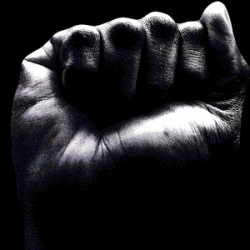
We rightly recoil from Nazism not only for its racism and violence, but because it was a totalitarian system of government; such systems inevitably create more problems than they solve. So the solution to our current quagmire is not to impose some sort of top-down measure of control. And this is where contemplation comes in. For like the French freedom fighters of WWII, contemplation represents a way to disengage from the toxicity of our current world order, not in terms of supporting violent revolution, but in an opposite move: by embracing a revolution of humility and love. We cannot beat the greedy, violent, unjust enemy-that-is-us with weapons or military might. Only by "dropping out" of the system can we hope to overcome it with a new way of living. What is this new way? A way of reconciliation rather than violence, of shared resources rather than enforced inequity, a way of simply and quietly living rather than getting caught up in the ever-increasing frenzy of acquisition and competition. Such values are the fruit of contemplation. They are the values that monasteries embody, if imperfectly. They are the values of resistance.
Article Continued On Next Page
Page: 1 of 2
12/2/2022 9:10:31 PM
Progressive Christian
Let the Earth Keep Silence
Contemplative Spirituality
Cistercian Spirituality
History
Monasticism
Progressive Christianity
Christianity
more at patheos
1

Could you go an entire life without a word of praise?
2

Dying at Easter, How Does a Former Senator Contemplate Life?
3

Meet Christian Fantasy Writer L. Jagi Lamplighter Wright
4
About
Patheos Explore the world's faith through different perspectives on religion and spirituality! Patheos has the views of the prevalent religions and spiritualities of the world.
Ad-Free & Subscriber Log-In Subscription Support
- About Us
- 2026 Calendar
- Videos
- Podcasts
- Library of World Religions
- Faith In Media Tracker
- Advertise With Us
- Write for Us
- Privacy Policy
- Terms of Service
- Do Not Sell My Data
- Contact Us
- Radiant Digital
- Manage Newsletter Subscriptions
- Unsubscribe From Notifications
- Sitemap
Copyright 2008-2026, Patheos, part of the Radiant Digital network of media brands. All rights reserved.
Subscription Support Ad-Free & Subscriber Log-In
Follow Patheos