
BuddhistCatholicContemplativeEvangelicalGeneral ChristianHinduJewishLatter-day SaintMuslimNew VisionsProgressive Christian
Beliefs
- Buddhist
- Catholic
- Contemplative
- Evangelical
- General Christian
- Hindu
- Jewish
- Latter-day Saint
- More Voices
- Muslim
- New Visions
- Pagan
- Progressive Christian
Topics
- Religion News
- Food and Religion
- Sports and Religion
- Religious Art
- Religious Music and Entertainment
- Religious Events
- History and Religion
- Style and Religion
- Politics and Religion
- Women in Religion
- Recreation Outdoors and Religion
- Business Finance and Religion
- Careers Workplace and Religion
- Education and Religion
- Family Parenting and Religion
- Health Fitness and Religion
- Home and Religion
- Relationships and Religion
- Technology and Religion
- Travel and Religion
Columnists
- Buddhist Columnists
- Business Finance and Religion Columnists
- Careers Workplace and Religion Columnists
- Catholic Columnists
- Contemplative Columnists
- Education and Religion Columnists
- Evangelists Columnists
- Family Parenting and Religion Columnists
- General Christian Columnists
- Health Fitness and Religion Columnists
- Hindu Columnists
- History and Religion Columnists
- Home and Religion Columnists
- Jewish Columnists
- More Voices Columnists
- Latter Day Columnists
- Muslim Columnists
- New Visions Columnists
- Nonreligious Columnists
- Pagan Columnists
- Politics and Religion Columnists
- Progressive Columnists
- Recreation Outdoors and Religion Columnists
- Relationships and Religion Columnists
- Religion News Columnists
- Religious Art Columnists
- Religious Events Columnists
- Religious Music and Entertainment Columnists
- Sports and Religion Columnists
- Style and Religion Columnists
- Technology and Religion Columnists
- Travel and Religion Columnists
- Women in Religion Columnists
Resource Library
- 2026 Calendar
- Library of World Religions
- The 100 Most Holy Places on Earth
- Patheos Answers
- Podcasts
- Videos
- Faith Leaders Database
- Anglican Episcopalian
- Bahai
- Baptist
- Buddhism
- Christianity
- Confucianism
- Eastern Orthodoxy
- Hinduism
- Holiness and Pentecostal
- ISKCON
- Islam
- Judaism
- Lutheran
- Methodist
- The Church of Jesus Christ of Latter-day Saints
- New Age
- Paganism
- Presbytarian and Reformed
- Protestantism
- Religion Behind the Scenes
- Roman Catholic
- Scientology
- Shia Islam
- Sikhism
- Sufism
- Sunni Islam
- Taoism
- Zen
- See all religions
Research Tools
 Ad-Free & Subscriber Log-In Subscription Support
Follow Patheos 

- Trending:
- Advent
- |
- Forgiveness
- |
- Thanksgiving
- |
- Election
- |
- Seasonal Holidays
- |
- Marriage
Progressive Christian
Collective Codependency
June 04, 2012 by Frederick Schmidt
These are strange days in public policy. California recently introduced the country's first "Drug User's Union" and New York's Mayor Bloomberg is working to outlaw super-sized sugary drinks.
The Union's goal is to advocate for the health needs of drug users and shape public health policy accordingly. Membership is open to everyone, whether they are high or using, and the Union neither encourages nor discourages drug use. The only restriction is that you can't shoot up in the meeting itself. If you need to be high, you need to get that process started in advance of the meeting.
Meanwhile, on the East Coast, New York's mayor is after super-sized sodas and the contribution that they make to obesity. Announcing his efforts to ban anything larger than a 16-ounce serving in the city's restaurants, theaters, stadiums, and arenas, the Mayor's spokesperson described the move as the leading edge of what the Mayor believes will become a popular trend in combating our nation's growing waistline.
In this strange mix of laissez faire and controlling impulses, it is probably a mistake to look for a common political denominator. From a spiritual point of view, the problems are fairly obvious.
First, they both foster collective codependency.
Anyone who has studied family systems knows that you cannot make life choices for others — even those you love. Neither the effort to make it easier for people to make self-destructive choices nor policies designed to make healthy decisions for other people can lead to any deeply rooted changes in behavior. That reality is no less true in the world of public policy than it is in interpersonal relationships. Wrapping large budgets and legislation around either effort makes not one wit of difference.
The other common denominator here may be the spiritual (or not so spiritual) assumption that our governments can serve as surrogates for personal responsibility.
Both policies eschew personal responsibility and discipline —assuming (with very different results) that we can be spared the difficult business of living our lives by dispatching life's challenges through legislative fiat. There is a fuzzy set of boundaries here, of course, because governments serve no purpose at all if they do not work for the common good. No one wants to live in a nation without laws against murder and mayhem. However, what both New York and San Francisco are promoting is a world in which the virtue and discipline are strangely unnecessary.
Is this our leaders' fault? Yes. But it is ours as well. We get the kind of government that we deserve. And when we vote and live as if we did not bear responsibility for our own choices, then we will breed the bizarre mix of permission-giving and overbearing control that is on display in both stories. Until we begin to shoulder our own moral and spiritual obligations, our leaders will continue to offer solutions to problems that they cannot solve — in large part because we reward them for the effort.
Perhaps it is time to stop talking about the kind of country we want and start talking about the kind of people we need to be. Until we do, we will find it difficult to resist the temptation to make our lives the society's problem. And codependent relationships, large and small, interpersonal and collective, all end the same way — in failure and self-deception.
12/2/2022 9:10:31 PM
Progressive Christian
News and Politics
The Spiritual Landscape
Progressive Christianity
Christianity
Protestantism
more at patheos
1

The Priesthood of All Believers & Vocation
2
3
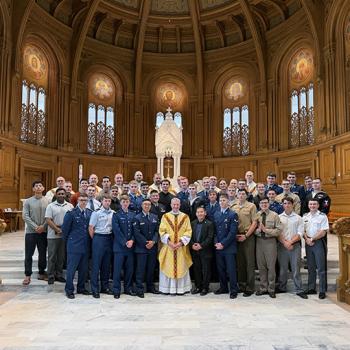
U.S. Military Chaplain Hopefuls Turn Out in Record Numbers
4

Will Even Spiders Be on the New Earth?

About Frederick Schmidt
Frederick W. Schmidt is the author of The Dave Test: A Raw Look at Real Life in Hard Times (Abingdon Press: 2013) and several other books, including A Still Small Voice: Women, Ordination and the Church (Syracuse University Press, 1998), The Changing Face of God (Morehouse, 2000), When Suffering Persists (Morehouse, 2001), in Italian translation: Sofferenza, All ricerca di una riposta (Torino: Claudiana, 2004), What God Wants for Your Life (Harper, 2005), Conversations with Scripture: Revelation (Morehouse, 2005) and Conversations with Scripture: Luke (Morehouse, 2009). He holds the Rueben P. Job Chair in Spiritual Formation at Garrett-Evangelical Theological Seminary in Evanston, IL, and directs the Job Institute for Spiritual formation. He is an Episcopal Priest, spiritual director, retreat facilitator, conference leader, writer, and Consulting Editor at Church Publishing in New York. He and his wife, Natalie live in Chicago, Illinois. He can also be reached at: http://frederickwschmidt.com/
Patheos Explore the world's faith through different perspectives on religion and spirituality! Patheos has the views of the prevalent religions and spiritualities of the world.
Ad-Free & Subscriber Log-In Subscription Support
- About Us
- 2026 Calendar
- Videos
- Podcasts
- Library of World Religions
- Faith In Media Tracker
- Advertise With Us
- Write for Us
- Privacy Policy
- Terms of Service
- Do Not Sell My Data
- Contact Us
- Radiant Digital
- Manage Newsletter Subscriptions
- Unsubscribe From Notifications
- Sitemap
Copyright 2008-2026, Patheos, part of the Radiant Digital network of media brands. All rights reserved.
Subscription Support Ad-Free & Subscriber Log-In
Follow Patheos