
BuddhistCatholicContemplativeEvangelicalGeneral ChristianHinduJewishLatter-day SaintMuslimNew VisionsProgressive Christian
Beliefs
- Buddhist
- Catholic
- Contemplative
- Evangelical
- General Christian
- Hindu
- Jewish
- Latter-day Saint
- More Voices
- Muslim
- New Visions
- Pagan
- Progressive Christian
Topics
- Religion News
- Food and Religion
- Sports and Religion
- Religious Art
- Religious Music and Entertainment
- Religious Events
- History and Religion
- Style and Religion
- Politics and Religion
- Women in Religion
- Recreation Outdoors and Religion
- Business Finance and Religion
- Careers Workplace and Religion
- Education and Religion
- Family Parenting and Religion
- Health Fitness and Religion
- Home and Religion
- Relationships and Religion
- Technology and Religion
- Travel and Religion
Columnists
- Buddhist Columnists
- Business Finance and Religion Columnists
- Careers Workplace and Religion Columnists
- Catholic Columnists
- Contemplative Columnists
- Education and Religion Columnists
- Evangelists Columnists
- Family Parenting and Religion Columnists
- General Christian Columnists
- Health Fitness and Religion Columnists
- Hindu Columnists
- History and Religion Columnists
- Home and Religion Columnists
- Jewish Columnists
- More Voices Columnists
- Latter Day Columnists
- Muslim Columnists
- New Visions Columnists
- Nonreligious Columnists
- Pagan Columnists
- Politics and Religion Columnists
- Progressive Columnists
- Recreation Outdoors and Religion Columnists
- Relationships and Religion Columnists
- Religion News Columnists
- Religious Art Columnists
- Religious Events Columnists
- Religious Music and Entertainment Columnists
- Sports and Religion Columnists
- Style and Religion Columnists
- Technology and Religion Columnists
- Travel and Religion Columnists
- Women in Religion Columnists
Resource Library
- 2026 Calendar
- Library of World Religions
- The 100 Most Holy Places on Earth
- Patheos Answers
- Podcasts
- Videos
- Faith Leaders Database
- Anglican Episcopalian
- Bahai
- Baptist
- Buddhism
- Christianity
- Confucianism
- Eastern Orthodoxy
- Hinduism
- Holiness and Pentecostal
- ISKCON
- Islam
- Judaism
- Lutheran
- Methodist
- The Church of Jesus Christ of Latter-day Saints
- New Age
- Paganism
- Presbytarian and Reformed
- Protestantism
- Religion Behind the Scenes
- Roman Catholic
- Scientology
- Shia Islam
- Sikhism
- Sufism
- Sunni Islam
- Taoism
- Zen
- See all religions
Research Tools
 Ad-Free & Subscriber Log-In Subscription Support
Follow Patheos 

- Trending:
- Advent
- |
- Forgiveness
- |
- Thanksgiving
- |
- Election
- |
- Seasonal Holidays
- |
- Marriage
RELIGION LIBRARY
Roman Catholicism
Toggle navigation
overview
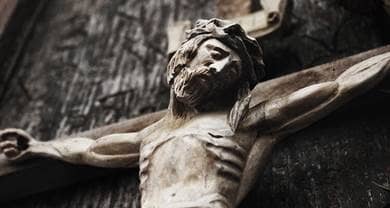
Roman Catholicism is a worldwide religious tradition of some 1.1 billion members. It traces its history to Jesus of Nazareth, an itinerant preacher in the area around Jerusalem during the period of Roman occupation, in the early 30s of the Common Era. Its members congregate in a communion of churches headed by bishops, whose role originated with the disciples of Jesus. Over a period of some decades after Jesus' life, death, and resurrection, the bishops spread out across the world to form a "universal" (Greek, katholikos) church, with the bishop of Rome (traced to the apostle Peter) holding primacy. Today Vatican City — and specifically, Saint Peter's Basilica — stands over the grave of Peter, and the pope is considered Peter's successor. Catholic Christianity began as a persecuted religious community, illegal in the Roman Empire in its earliest days, but within some three hundred years and with the conversion of the Emperor Constantine, it became legal and eventually was recognized as the official religion of the Empire. With the decline and fall of Rome in the 5th century, the Roman Church assumed both temporal and spiritual authority in the West; it thus had enormous influence on the development of the art and culture of the western world through the Middle Ages. Today, its growth is fastest in Africa, South America, and Asia.
Quick Fact Details:
-
Formed: The exact date of the beginning of the Roman Catholic Church is indeterminable. While the belief system recognized as Christianity is in place by the first century, institutional structures developed over time. Nor is it possible to distinguish Catholicism as a separate tradition until it can be differentiated from other Christian traditions (most notably, Eastern Orthodoxy and Protestantism). Scholars recognize a variety of significant institutional, theological, and cultural markers in this development:
- 325 — Council of Nicea. The first post-apostolic ecumenical council of the Christian community at which Church leaders formed a creedal statement of belief recognized universally.
- 381 — First Council of Constantinople. This council amended and ratified the Nicene Creed, resulting in the version used by Christian churches around the world.
- 440-461 — Pope Leo I. Many historians suggest that Pope Leo is the first to claim universal jurisdiction over the worldwide Church, thus initiating the rise of the papacy, a uniquely Roman Catholic structure.
- 451 — The Council of Chalcedon. This is the first occasion of an institutional division within Christianity, as those who did not adhere to the conclusions of the Council (referred to as Oriental Orthodox) separated.
- 1054 — The Great Schism. Though the Eastern and Western branches of the Church had long been divided over theological, cultural, linguistic, and ecclesiological disputes, the separation was formalized in 1054, thus creating the first large-scale division within Christendom.
- 16th century — The term "Roman Catholic" is not generally used until the Protestant Reformation, and some historians see the Council of Trent (1545-1563) as a centralizing movement within Catholicism that enhanced the authority of Rome.
-
Sacred Texts: The Roman Catholic Church includes in the Old Testament several deuterocanoncial books that Protestants rejected. The New Testament is the same as that used by Christians everywhere.
Quick Fact Sources include www.adherents.com, www.bbc.co.uk/religion, The Oxford Handbook of Global Religions (2006), The Encyclopedia of Religion (2005), the Religious Movements Page at the University of Virginia, The Cambridge Illustrated History of Religions (2002), and the Encyclopedia of World Religions (1999).
Quick Facts
Formed 1st - 5th centuries C.E. Adherents 1,170,000,000 Deity God (Trinity) Sacred Text Bible Origin Roman-Latin Empire Headquarters Vatican City
Back to Religion Library
editors picks View all columns

Evangelical
Before You Unplug or Sign Out for Good

Evangelical
What Is the Purpose of Spiritual Gifts, and How Do You Discover Yours?
New Visions
5 Ways to Hear What God is Telling You
Muslim
How Awake Are We? When Waking Up is Falling Asleep
Latter-day Saint
"The Church supports the use of vaccinations"
Evangelical
Luther and the Beauty of Christ
The Soul of Gospel Music Explored in New Netflix Series "Voices of Fire"
Seven Ways to Think About Christian Mysticism
Evangelical

Evangelical
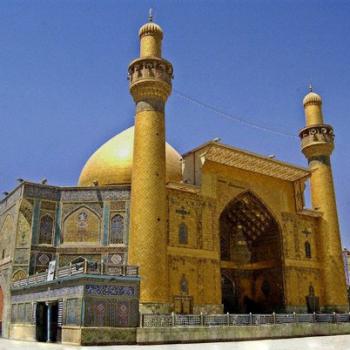
Muslim
Imam Ali’s letter to the Governor- Everlasting Example of Good...
Progressive Christian
Patheos Explore the world's faith through different perspectives on religion and spirituality! Patheos has the views of the prevalent religions and spiritualities of the world.
Ad-Free & Subscriber Log-In Subscription Support
- About Us
- 2026 Calendar
- Videos
- Podcasts
- Library of World Religions
- Faith In Media Tracker
- Advertise With Us
- Write for Us
- Privacy Policy
- Terms of Service
- Do Not Sell My Data
- Contact Us
- Radiant Digital
- Manage Newsletter Subscriptions
- Unsubscribe From Notifications
- Sitemap
Copyright 2008-2026, Patheos, part of the Radiant Digital network of media brands. All rights reserved.
Subscription Support Ad-Free & Subscriber Log-In
Follow Patheos