
BuddhistCatholicContemplativeEvangelicalGeneral ChristianHinduJewishLatter-day SaintMuslimNew VisionsProgressive Christian
Beliefs
- Buddhist
- Catholic
- Contemplative
- Evangelical
- General Christian
- Hindu
- Jewish
- Latter-day Saint
- More Voices
- Muslim
- New Visions
- Pagan
- Progressive Christian
Topics
- Religion News
- Food and Religion
- Sports and Religion
- Religious Art
- Religious Music and Entertainment
- Religious Events
- History and Religion
- Style and Religion
- Politics and Religion
- Women in Religion
- Recreation Outdoors and Religion
- Business Finance and Religion
- Careers Workplace and Religion
- Education and Religion
- Family Parenting and Religion
- Health Fitness and Religion
- Home and Religion
- Relationships and Religion
- Technology and Religion
- Travel and Religion
Columnists
- Buddhist Columnists
- Business Finance and Religion Columnists
- Careers Workplace and Religion Columnists
- Catholic Columnists
- Contemplative Columnists
- Education and Religion Columnists
- Evangelists Columnists
- Family Parenting and Religion Columnists
- General Christian Columnists
- Health Fitness and Religion Columnists
- Hindu Columnists
- History and Religion Columnists
- Home and Religion Columnists
- Jewish Columnists
- More Voices Columnists
- Latter Day Columnists
- Muslim Columnists
- New Visions Columnists
- Nonreligious Columnists
- Pagan Columnists
- Politics and Religion Columnists
- Progressive Columnists
- Recreation Outdoors and Religion Columnists
- Relationships and Religion Columnists
- Religion News Columnists
- Religious Art Columnists
- Religious Events Columnists
- Religious Music and Entertainment Columnists
- Sports and Religion Columnists
- Style and Religion Columnists
- Technology and Religion Columnists
- Travel and Religion Columnists
- Women in Religion Columnists
Resource Library
- 2026 Calendar
- Library of World Religions
- The 100 Most Holy Places on Earth
- Patheos Answers
- Podcasts
- Videos
- Faith Leaders Database
- Anglican Episcopalian
- Bahai
- Baptist
- Buddhism
- Christianity
- Confucianism
- Eastern Orthodoxy
- Hinduism
- Holiness and Pentecostal
- ISKCON
- Islam
- Judaism
- Lutheran
- Methodist
- The Church of Jesus Christ of Latter-day Saints
- New Age
- Paganism
- Presbytarian and Reformed
- Protestantism
- Religion Behind the Scenes
- Roman Catholic
- Scientology
- Shia Islam
- Sikhism
- Sufism
- Sunni Islam
- Taoism
- Zen
- See all religions
Research Tools
 Ad-Free & Subscriber Log-In Subscription Support
Follow Patheos 

- Trending:
- Advent
- |
- Forgiveness
- |
- Thanksgiving
- |
- Election
- |
- Seasonal Holidays
- |
- Marriage

RELIGION LIBRARY
Methodist
Toggle navigation
Beliefs
Suffering and the Problem of Evil
Like all monotheists (those who believe in one God), Methodists confront a dilemma on the subject of evil and suffering. Does God want to relieve suffering, but is unable? In that case God is good but not all-powerful. Is God able to relieve suffering but unwilling or too unconcerned? Then God is all-powerful but not good. Though in the end the intellectual tensions may not be resolvable, there are a couple of well-worn paths from the Christian tradition through this thicket, one of which is taken by John Wesley and after him the Methodists.
One path is to argue that there is something inherently corruptible about matter that necessarily makes things go bad. John Wesley does not take this path. He believed that God, perfectly good and all-powerful, created the best of all possible universes. There is no shortcoming in creation that makes suffering and evil necessary. Rather, suffering enters the world because of evil, and evil enters the world because of an act of will, a choice.
The first creature to make a bad choice was Lucifer, one of God's angels. In addition to information revealed in scripture, Wesley was deeply influenced by John Milton's Paradise Lost. Because angels (as humans) are created in the image of God, they are created with free will. Lucifer, the greatest angelic being, succumbed to pride (he did not want to spend eternity submitting to God), revolted, taking with him some of the angels. Since that time there has been a cosmic struggle between good and bad angels, the latter group led by Lucifer, most often referred to as Satan.
The story is recapitulated in the Garden of Eden, where Adam and Eve (also created in the image of God with free will) disobeyed God (also out of pride). Adam and Eve were caught in the cosmic angelic crossfire and were pawns in Satan's game. Satan tempted the first humans into sin, but they nonetheless bear responsibility for freely choosing it.
Wesley adopted a traditional Christian distinction between types of suffering: natural, moral, and penal. People suffer because of disease and natural disaster; people suffer because other people harm them; and people suffer because they are punished for wrongdoing. All are the result of freely chosen sin‚ personal and corporate.
When one surveys the natural world, with nature red in tooth and claw, and natural disasters, disease, and death, one might wonder if a good powerful God could not have designed a better universe. Wesley argued that God did in fact design a better universe, and that nature as it is now, which can be a source of great pain, became the way it is as a result of sin. Human sin dragged the entire created order down with it.
As for moral suffering, it is not hard to see that sin, the result of which is self-centered human nature, gives rise to humans who seek their own good above the good of others, and do not mind causing pain along the way. As for penal suffering, it is also not hard to see that a just God would mete out punishment for sin (and as an encouragement to do better).
At this point, a Christian might ask, Why did God not create Lucifer and human beings with free will, but with the good sense (or will or humility) to make better choices? Again, the tradition offers a couple of options. One is to say that without the fall, Jesus would not have been necessary, and that God's power and glory and love are more greatly manifested through the fall and salvation than through creation without a fall. Wesley agreed with this, as did John Calvin. But in the end there is an important difference between Wesley and Calvin on this matter.
Wesley stressed the human will's freedom to sin. And this will dovetail with the freedom of will we have later to accept justifying grace, and the freedom of will once justified not to sin again (sanctification). Calvin, in contrast, while assigning responsibility for sin to humans through Adam and Eve, was also clear that God did not simply allow this to happen, but that it was part of God's eternal plan. Calvin was unwilling to even appear to detract from divine omnipotence by placing any part of the story in human control. And this supported his argument that we are not free to accept or reject justifying grace; if it is offered by God we take it. It also supported his belief that humans, after justification, are not free to stop sinning entirely.
Study Questions:
1. Do Methodists believe that God created suffering? Explain.
2. How did Wesley distinguish suffering? Why does each category exist?
3. Contrast Wesley's understand of suffering to Calvin's.
Back to Religion Library
Editor's picks See all columnists

Evangelical
Before You Unplug or Sign Out for Good

Evangelical
What Is the Purpose of Spiritual Gifts, and How Do You Discover Yours?

New Visions
5 Ways to Hear What God is Telling You
Muslim
How Awake Are We? When Waking Up is Falling Asleep
Latter-day Saint
"The Church supports the use of vaccinations"
Evangelical
Luther and the Beauty of Christ
The Soul of Gospel Music Explored in New Netflix Series "Voices of Fire"

Seven Ways to Think About Christian Mysticism

Evangelical

Evangelical
Muslim
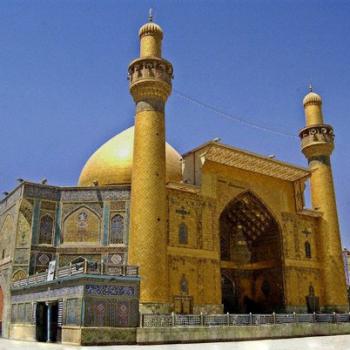
Imam Ali’s letter to the Governor- Everlasting Example of Good...
Progressive Christian
Patheos Explore the world's faith through different perspectives on religion and spirituality! Patheos has the views of the prevalent religions and spiritualities of the world.
Ad-Free & Subscriber Log-In Subscription Support
- About Us
- 2026 Calendar
- Videos
- Podcasts
- Library of World Religions
- Faith In Media Tracker
- Advertise With Us
- Write for Us
- Privacy Policy
- Terms of Service
- Do Not Sell My Data
- Contact Us
- Radiant Digital
- Manage Newsletter Subscriptions
- Unsubscribe From Notifications
- Sitemap
Copyright 2008-2026, Patheos, part of the Radiant Digital network of media brands. All rights reserved.
Subscription Support Ad-Free & Subscriber Log-In
Follow Patheos