
BuddhistCatholicContemplativeEvangelicalGeneral ChristianHinduJewishLatter-day SaintMuslimNew VisionsProgressive Christian
Beliefs
- Buddhist
- Catholic
- Contemplative
- Evangelical
- General Christian
- Hindu
- Jewish
- Latter-day Saint
- More Voices
- Muslim
- New Visions
- Pagan
- Progressive Christian
Topics
- Religion News
- Food and Religion
- Sports and Religion
- Religious Art
- Religious Music and Entertainment
- Religious Events
- History and Religion
- Style and Religion
- Politics and Religion
- Women in Religion
- Recreation Outdoors and Religion
- Business Finance and Religion
- Careers Workplace and Religion
- Education and Religion
- Family Parenting and Religion
- Health Fitness and Religion
- Home and Religion
- Relationships and Religion
- Technology and Religion
- Travel and Religion
Columnists
- Buddhist Columnists
- Business Finance and Religion Columnists
- Careers Workplace and Religion Columnists
- Catholic Columnists
- Contemplative Columnists
- Education and Religion Columnists
- Evangelists Columnists
- Family Parenting and Religion Columnists
- General Christian Columnists
- Health Fitness and Religion Columnists
- Hindu Columnists
- History and Religion Columnists
- Home and Religion Columnists
- Jewish Columnists
- More Voices Columnists
- Latter Day Columnists
- Muslim Columnists
- New Visions Columnists
- Nonreligious Columnists
- Pagan Columnists
- Politics and Religion Columnists
- Progressive Columnists
- Recreation Outdoors and Religion Columnists
- Relationships and Religion Columnists
- Religion News Columnists
- Religious Art Columnists
- Religious Events Columnists
- Religious Music and Entertainment Columnists
- Sports and Religion Columnists
- Style and Religion Columnists
- Technology and Religion Columnists
- Travel and Religion Columnists
- Women in Religion Columnists
Resource Library
- 2026 Calendar
- Library of World Religions
- The 100 Most Holy Places on Earth
- Patheos Answers
- Podcasts
- Videos
- Faith Leaders Database
- Anglican Episcopalian
- Bahai
- Baptist
- Buddhism
- Christianity
- Confucianism
- Eastern Orthodoxy
- Hinduism
- Holiness and Pentecostal
- ISKCON
- Islam
- Judaism
- Lutheran
- Methodist
- The Church of Jesus Christ of Latter-day Saints
- New Age
- Paganism
- Presbytarian and Reformed
- Protestantism
- Religion Behind the Scenes
- Roman Catholic
- Scientology
- Shia Islam
- Sikhism
- Sufism
- Sunni Islam
- Taoism
- Zen
- See all religions
Research Tools
 Ad-Free & Subscriber Log-In Subscription Support
Ad-Free & Subscriber Log-In Subscription Support
Follow Patheos 

- Trending:
- Forgiveness
- |
- Marriage
- |
- Consciousness
- |
- Death Penalty
- |
- Election
- |
- Halloween
RELIGION LIBRARY
Lutheran
Toggle navigation
Rituals and Worship
Symbolism
In many ways, though Luther challenged the basic assumptions of Roman Catholic theology, he was a conservative reformer. He had a sense that the reform would be more successful if it proceeded by persuasion rather than force, and if it proceeded not too quickly, to give average church-goers time to adjust. In addition, his basic scriptural principle for church practice was that historical traditions that did not contradict scripture were fine. (Other reformers argued that only those traditions found in scripture could be continued.)
What this means is that one is far more likely to mistake a Lutheran church for a Roman Catholic Church than to mistake a Presbyterian or Methodist Church for a Roman Catholic Church. The statues of saints and the paintings of scenes from the Bible and from Christian history were not stripped out of churches in Lutheran territories to the extent that they were in Calvinist territories. Lutheran symbolism, therefore, is closer to Catholic symbolism.
One exemplary instance of Lutheran symbolism and aesthetics is a triptych over the altar in a church in Weimar, Germany painted by Lucas Cranach the Elder (1472-1523), and completed by his son, Lucas Cranach the Younger. The colors of the triptych are warm and vibrant, the scenes depicted quite graphic. The painting attempts to capture the main elements of Luther's theology. The painting is dominated by a large depiction of Christ on the cross in the middle panel. Behind him Moses is shown holding the tablets with the Ten Commandments. A man is shown being chased into hell by a skeleton with a spear, representing the condemnation of all humans under the law. Perhaps the most striking feature of the painting is the depiction of Luther, standing at the foot of the cross holding an open Bible (symbolizing the idea that salvation comes only through the promises of forgiveness found in scripture). A stream of blood from the side of Jesus, where he was pierced by the spear of a Roman soldier, cascades down in an arc onto Luther's head. Luther's sins have been forgiven by the sacrifice made by Christ on the cross.
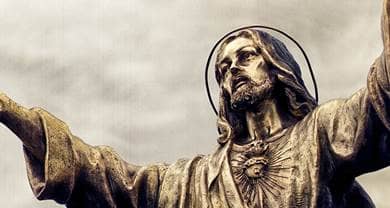
The dominant symbol for Lutherans is the cross. Sometimes this can be a crucifix (a cross with Christ on it, symbolizing Jesus' sacrifice for us), but it is often an empty cross (symbolizing Jesus' resurrection). Other symbols frequently seen in Lutheran churches are triangles, trefoils, and fleur-de-lis, all symbolizing the Trinity, an open book symbolizing the word of God, and a fish (the Greek words "Jesus Christ, Son of God, Savior" form the acronym of the word fish, and this is one of the earliest and most popular symbols of Christians). Sometimes one sees Luther's seal (a rose with a heart in the center and a cross in the center of the heart). The Evangelical Lutheran Church in America has as its logo a stylized globe with the shape of the cross in the middle.
Back to Religion Library
Editor's picks See all columnists

Evangelical
Before You Unplug or Sign Out for Good

Evangelical
What Is the Purpose of Spiritual Gifts, and How Do You Discover Yours?

New Visions
5 Ways to Hear What God is Telling You

Muslim
How Awake Are We? When Waking Up is Falling Asleep

Latter-day Saint
"The Church supports the use of vaccinations"

Evangelical
Luther and the Beauty of Christ

The Soul of Gospel Music Explored in New Netflix Series "Voices of Fire"

Seven Ways to Think About Christian Mysticism
Evangelical

Evangelical

Muslim
Imam Ali’s letter to the Governor- Everlasting Example of Good...

Progressive Christian
Patheos Explore the world's faith through different perspectives on religion and spirituality! Patheos has the views of the prevalent religions and spiritualities of the world.
Ad-Free & Subscriber Log-In Subscription Support
- About Us
- 2026 Calendar
- Videos
- Podcasts
- Library of World Religions
- Faith In Media Tracker
- Advertise With Us
- Write for Us
- Privacy Policy
- Terms of Service
- Do Not Sell My Data
- Contact Us
- Radiant Digital
- Manage Newsletter Subscriptions
- Unsubscribe From Notifications
- Sitemap
Copyright 2008-2026, Patheos. All rights reserved.
Subscription Support Ad-Free & Subscriber Log-In
Follow Patheos