
BuddhistCatholicContemplativeEvangelicalGeneral ChristianHinduJewishLatter-day SaintMuslimNew VisionsProgressive Christian
Beliefs
- Buddhist
- Catholic
- Contemplative
- Evangelical
- General Christian
- Hindu
- Jewish
- Latter-day Saint
- More Voices
- Muslim
- New Visions
- Pagan
- Progressive Christian
Topics
- Religion News
- Food and Religion
- Sports and Religion
- Religious Art
- Religious Music and Entertainment
- Religious Events
- History and Religion
- Style and Religion
- Politics and Religion
- Women in Religion
- Recreation Outdoors and Religion
- Business Finance and Religion
- Careers Workplace and Religion
- Education and Religion
- Family Parenting and Religion
- Health Fitness and Religion
- Home and Religion
- Relationships and Religion
- Technology and Religion
- Travel and Religion
Columnists
- Buddhist Columnists
- Business Finance and Religion Columnists
- Careers Workplace and Religion Columnists
- Catholic Columnists
- Contemplative Columnists
- Education and Religion Columnists
- Evangelists Columnists
- Family Parenting and Religion Columnists
- General Christian Columnists
- Health Fitness and Religion Columnists
- Hindu Columnists
- History and Religion Columnists
- Home and Religion Columnists
- Jewish Columnists
- More Voices Columnists
- Latter Day Columnists
- Muslim Columnists
- New Visions Columnists
- Nonreligious Columnists
- Pagan Columnists
- Politics and Religion Columnists
- Progressive Columnists
- Recreation Outdoors and Religion Columnists
- Relationships and Religion Columnists
- Religion News Columnists
- Religious Art Columnists
- Religious Events Columnists
- Religious Music and Entertainment Columnists
- Sports and Religion Columnists
- Style and Religion Columnists
- Technology and Religion Columnists
- Travel and Religion Columnists
- Women in Religion Columnists
Resource Library
- 2026 Calendar
- Library of World Religions
- The 100 Most Holy Places on Earth
- Patheos Answers
- Podcasts
- Videos
- Faith Leaders Database
- Anglican Episcopalian
- Bahai
- Baptist
- Buddhism
- Christianity
- Confucianism
- Eastern Orthodoxy
- Hinduism
- Holiness and Pentecostal
- ISKCON
- Islam
- Judaism
- Lutheran
- Methodist
- The Church of Jesus Christ of Latter-day Saints
- New Age
- Paganism
- Presbytarian and Reformed
- Protestantism
- Religion Behind the Scenes
- Roman Catholic
- Scientology
- Shia Islam
- Sikhism
- Sufism
- Sunni Islam
- Taoism
- Zen
- See all religions
Research Tools
 Ad-Free & Subscriber Log-In Subscription Support
Ad-Free & Subscriber Log-In Subscription Support
Follow Patheos 

- Trending:
- Forgiveness
- |
- Marriage
- |
- Consciousness
- |
- Death Penalty
- |
- Election
- |
- Halloween
RELIGION LIBRARY
Lutheran
Toggle navigation
Rituals and Worship
Sacred Space
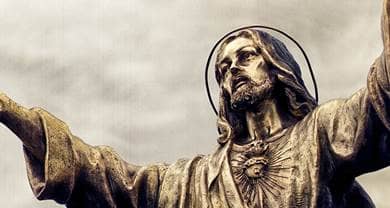
Martin Luther's principle for reforming church practice was that anything not forbidden by scripture was allowed. Other reformers (like Huldrych Zwingli taught that only those things explicitly authorized by scripture were allowed. So, for example, since the Bible does not mention organs and hymn singing, Zwingli did not allow them; instead the congregation in his churches chanted psalms. Luther, in contrast, loved organs and hymns, writing many of the most famous himself. An important consequence of these different philosophies is that Lutheran churches tend to be far more ornate and decorated than Reformed churches. In general they did not go through the same period of "iconoclasm" in which statues and paintings were removed from Roman Catholic worship spaces.
Luther left the safety of the Wartburg castle, where he had been hiding following his excommunication and condemnation as a criminal, to slow down the pace of liturgical reform and quell outbreaks of iconoclasm. He returned to Wittenberg following Christmas 1521 because he felt his colleague at Wittenberg, Andreas Carlstadt, was forcing harmful and unnecessary liturgical changes and encouraging iconoclasm.
The physical set up of Lutheran worship space is strongly influenced by the twin emphases of worship: preaching the word and receiving the sacraments. A typical church will have a narthex, which is a vestibule or hallway between the outside of the building and the sanctuary, or main worship hall. In the chancel, the front area of the worship hall, one typically finds a table for the sacrament of communion, a baptismal font, and a pulpit in which the preacher stands to deliver the sermon. In the Roman Catholic Church at this time the altar was against the east wall. The priest's back was to the congregation, and so they could not hear him (in any case he was speaking Latin), nor could they see him bless the bread and wine until he lifted them up over his head. (Use of the phrase "hocus pocus" to signify magic may originate in Protestant mocking of the Latin phrase used in the Roman Catholic mass "hoc est corpus meum"-"This is my body.") Luther moved the table on which the Lord's Supper was celebrated out from the east wall of the chancel, thus, closer to the congregation, so that the minister could stand behind it facing the congregation. It was important to him that they saw and heard and understood what was happening.
Often there is a "communion rail" or "altar rail" around the chancel, at which people can kneel to pray or receive communion. In the 19th century, the pulpit was usually in the center of the chancel. In the 20th century, a "divided chancel" became common, with the table or altar in the center against the east wall, the pulpit on one side, and a lectern (for scripture reading) on the other. More recent architecture is varied, but often has a free-standing table in the center, the pulpit on one side, and the baptismal font or lectern on the other.
Back to Religion Library
Editor's picks See all columnists

Evangelical
Before You Unplug or Sign Out for Good

Evangelical
What Is the Purpose of Spiritual Gifts, and How Do You Discover Yours?

New Visions
5 Ways to Hear What God is Telling You

Muslim
How Awake Are We? When Waking Up is Falling Asleep

Latter-day Saint
"The Church supports the use of vaccinations"

Evangelical
Luther and the Beauty of Christ

The Soul of Gospel Music Explored in New Netflix Series "Voices of Fire"

Seven Ways to Think About Christian Mysticism

Evangelical

Evangelical

Muslim
Imam Ali’s letter to the Governor- Everlasting Example of Good...

Progressive Christian
Patheos Explore the world's faith through different perspectives on religion and spirituality! Patheos has the views of the prevalent religions and spiritualities of the world.
Ad-Free & Subscriber Log-In Subscription Support
- About Us
- 2026 Calendar
- Videos
- Podcasts
- Library of World Religions
- Faith In Media Tracker
- Advertise With Us
- Write for Us
- Privacy Policy
- Terms of Service
- Do Not Sell My Data
- Contact Us
- Radiant Digital
- Manage Newsletter Subscriptions
- Unsubscribe From Notifications
- Sitemap
Copyright 2008-2026, Patheos. All rights reserved.
Subscription Support Ad-Free & Subscriber Log-In
Follow Patheos