
BuddhistCatholicContemplativeEvangelicalGeneral ChristianHinduJewishLatter-day SaintMuslimNew VisionsProgressive Christian
Beliefs
- Buddhist
- Catholic
- Contemplative
- Evangelical
- General Christian
- Hindu
- Jewish
- Latter-day Saint
- More Voices
- Muslim
- New Visions
- Pagan
- Progressive Christian
Topics
- Religion News
- Food and Religion
- Sports and Religion
- Religious Art
- Religious Music and Entertainment
- Religious Events
- History and Religion
- Style and Religion
- Politics and Religion
- Women in Religion
- Recreation Outdoors and Religion
- Business Finance and Religion
- Careers Workplace and Religion
- Education and Religion
- Family Parenting and Religion
- Health Fitness and Religion
- Home and Religion
- Relationships and Religion
- Technology and Religion
- Travel and Religion
Columnists
- Buddhist Columnists
- Business Finance and Religion Columnists
- Careers Workplace and Religion Columnists
- Catholic Columnists
- Contemplative Columnists
- Education and Religion Columnists
- Evangelists Columnists
- Family Parenting and Religion Columnists
- General Christian Columnists
- Health Fitness and Religion Columnists
- Hindu Columnists
- History and Religion Columnists
- Home and Religion Columnists
- Jewish Columnists
- More Voices Columnists
- Latter Day Columnists
- Muslim Columnists
- New Visions Columnists
- Nonreligious Columnists
- Pagan Columnists
- Politics and Religion Columnists
- Progressive Columnists
- Recreation Outdoors and Religion Columnists
- Relationships and Religion Columnists
- Religion News Columnists
- Religious Art Columnists
- Religious Events Columnists
- Religious Music and Entertainment Columnists
- Sports and Religion Columnists
- Style and Religion Columnists
- Technology and Religion Columnists
- Travel and Religion Columnists
- Women in Religion Columnists
Resource Library
- 2026 Calendar
- Library of World Religions
- The 100 Most Holy Places on Earth
- Patheos Answers
- Podcasts
- Videos
- Faith Leaders Database
- Anglican Episcopalian
- Bahai
- Baptist
- Buddhism
- Christianity
- Confucianism
- Eastern Orthodoxy
- Hinduism
- Holiness and Pentecostal
- ISKCON
- Islam
- Judaism
- Lutheran
- Methodist
- The Church of Jesus Christ of Latter-day Saints
- New Age
- Paganism
- Presbytarian and Reformed
- Protestantism
- Religion Behind the Scenes
- Roman Catholic
- Scientology
- Shia Islam
- Sikhism
- Sufism
- Sunni Islam
- Taoism
- Zen
- See all religions
Research Tools
 Ad-Free & Subscriber Log-In Subscription Support
Ad-Free & Subscriber Log-In Subscription Support
Follow Patheos 

- Trending:
- Forgiveness
- |
- Marriage
- |
- Consciousness
- |
- Death Penalty
- |
- Election
- |
- Halloween
Hindu
Imperialist Goals Masked in the Garb of Religious Freedom
August 05, 2012 by Ramesh Rao
The U.S. State Department and the U.S. Commission on International Religious Freedom submit annual reports evaluating conditions in the nations of the world regarding the citizens of those countries and their ability to profess and practice their faiths. Then there are myriad non-governmental organizations and activist groups, including the Hindu American Foundation, of which I am an executive council member, publishing their own reports. Such a massive effort of looking into others' internal matters is not undertaken by any other country. The U.S. is in many ways, the world's self-proclaimed policeman, seeking to keep world order. Whether it is right or wrong is not the focus of this essay, but instead we can argue that based on what the State Department's latest report says about religious freedom in India, the report and the exercise is flawed, myopic, and blinkered.
These exercises minding others' businesses should be carefully evaluated and critiqued so that we can understand why we wish to pry into others' lives and to claim for ourselves the ability and the right to do so. A colonial, imperialist hangover, one might say, as well as the Christian's wish to be his/her brother's/sister's keeper. The White Man's Burden may indeed be heavy and self-imposed, but how that burden is carried and is disposed of is no longer just the white man's concern but my concern too, and the concern of many like me --not Christian, not white, and not burdened with minding others' businesses.
Scholars and academics of the West have spent enormous effort at "understanding" and "describing" the other. Some have been sympathetic, some have embraced the other, but most have been very critical. As Rajiv Malhotra says in his recent article about Oprah Winfrey's visit to India and what she said about India, "the history of the West is replete with assertions of supremacy over the non-West on account of religious, racial, cultural and economic factors." Those assertions and evaluations have led to the reshaping of the world to imitate and mimic the West, at tremendous cost. Just to take the example of the ongoing Olympic games, one wonders why the rest of the world should play the sports invented and organized by Western countries, building expensive stadia, training athletes at enormous cost, and sending them to compete with others in a nationalistic rivalry replete with jingoistic slogans, and supremacist attitudes!
Malhotra refers to Andrew Rotter's work related to American policy toward South Asia during the Cold War, and Rotter's finding that American officials saw Indians as difficult to comprehend, and ". . . grotesque, smelly, disorderly, unsanitary, promiscuous and primitive." To some extent, and despite the reshaping of the world after the Cold War and India's newfound technical and technological savvy and its abilities to sell goods and services to the West, those notions about India still prevail, one can argue. Or, given the fact that the West is in some retreat, its officials and academics can still use their powers to continue to bring pressure on those developing countries and slow them as they gain upon them. One can see the U.S. official reports on religious freedoms and human rights as an example of pushing the "other" on to his/her back feet.
So, let us look at the latest State Department report on religious freedoms and what the department says about India. Here are excerpts from the report:
- During meetings with senior government officials, as well as state and local officials, and religious community leaders, senior U.S. officials discussed religious freedom issues, including reports of harassment of minority groups and missionaries, violence against religious minorities in Karnataka, and the 2002 communal riots in Gujarat.
- Despite the national government's continued rejection of Hindutva (Hindu nationalism), a few state and local governments continue to be influenced by Hindutva. During the year, some states passed laws based on Hindu religious beliefs that restrict the religious freedom of minority groups. For example, on September 29, Gujarat passed a bill that prohibits cow slaughter and requires a permit for transporting cows. The law mandates a seven-year jail term for anyone directly or indirectly involved in the slaughter, storage, transportation, or sale of cow or cow products. Critics argue that such laws deprive Muslims, Christians, and lower castes of livelihoods, a source of nutrition, and the right not to observe Hindu religious restrictions.
- There are active "anticonversion" laws in five of the twenty-eight states: Gujarat, Odisha (formerly Orissa), Chhattisgarh, Madhya Pradesh, and Himachal Pradesh. Although Arunachal Pradesh enacted its law in 1978, the government has yet to frame the rules needed for enforcement. Gujarat has a Freedom of Religion Act (2003) and Rules (2008) that proscribe religious conversions by means of allurement, force, or fraud.
- In 2007 Andhra Pradesh enacted the Propagation of Other Religions in the Places of Worship or Prayer (Prohibition) Law. The law allows the state to prohibit the propagation of one religion near a place of worship or prayer of another religion. Thus far, the state has identified only Hindu religious sites for this protection.
:::page break:::
Article Continued On Next Page
Page: 1 of 3
12/2/2022 9:08:54 PM
Hindu
God in the Age of Kali
India
Oprah Winfrey
Religious freedom
Hinduism
more at patheos
1

AI Detection and the Sin of Slander
2

How Faith Leaders Helped Pass the First Step Act
3

Suicide: New York's Shift in Physician-Assisted Rules
4

Be Still and Know That I am God
About Ramesh Rao
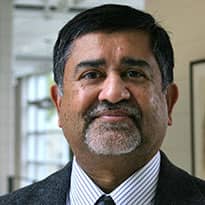
Ramesh Rao, Professor and Chair, DN3 Program, Columbus State University, Columbus, GA, is the author of two books on Indian politics and society and has written numerous op-eds for newspapers and magazines in India, the U.S., and the U.K. Ramesh served as Human Rights Coordinator and Executive Council member at the Hindu American Foundation between 2004-2013. He spent the first twenty-eight years of his life in India where he worked as a bank officer, a school teacher, and a copy editor. He received his MS in Mass Communication from the University of Southern Mississippi, and his PhD in Communication from Michigan State University. He taught at Truman State University in Kirksville, MO, and Longwood University in Farmville, VA, before he joined Columbus State University. He lives with wife Sujaya, and son Sudhanva in Columbus, GA.
Patheos Explore the world's faith through different perspectives on religion and spirituality! Patheos has the views of the prevalent religions and spiritualities of the world.
Ad-Free & Subscriber Log-In Subscription Support
- About Us
- 2026 Calendar
- Videos
- Podcasts
- Library of World Religions
- Faith In Media Tracker
- Advertise With Us
- Write for Us
- Privacy Policy
- Terms of Service
- Do Not Sell My Data
- Contact Us
- Radiant Digital
- Manage Newsletter Subscriptions
- Unsubscribe From Notifications
- Sitemap
Copyright 2008-2026, Patheos. All rights reserved.
Subscription Support Ad-Free & Subscriber Log-In
Follow Patheos